
Go to content

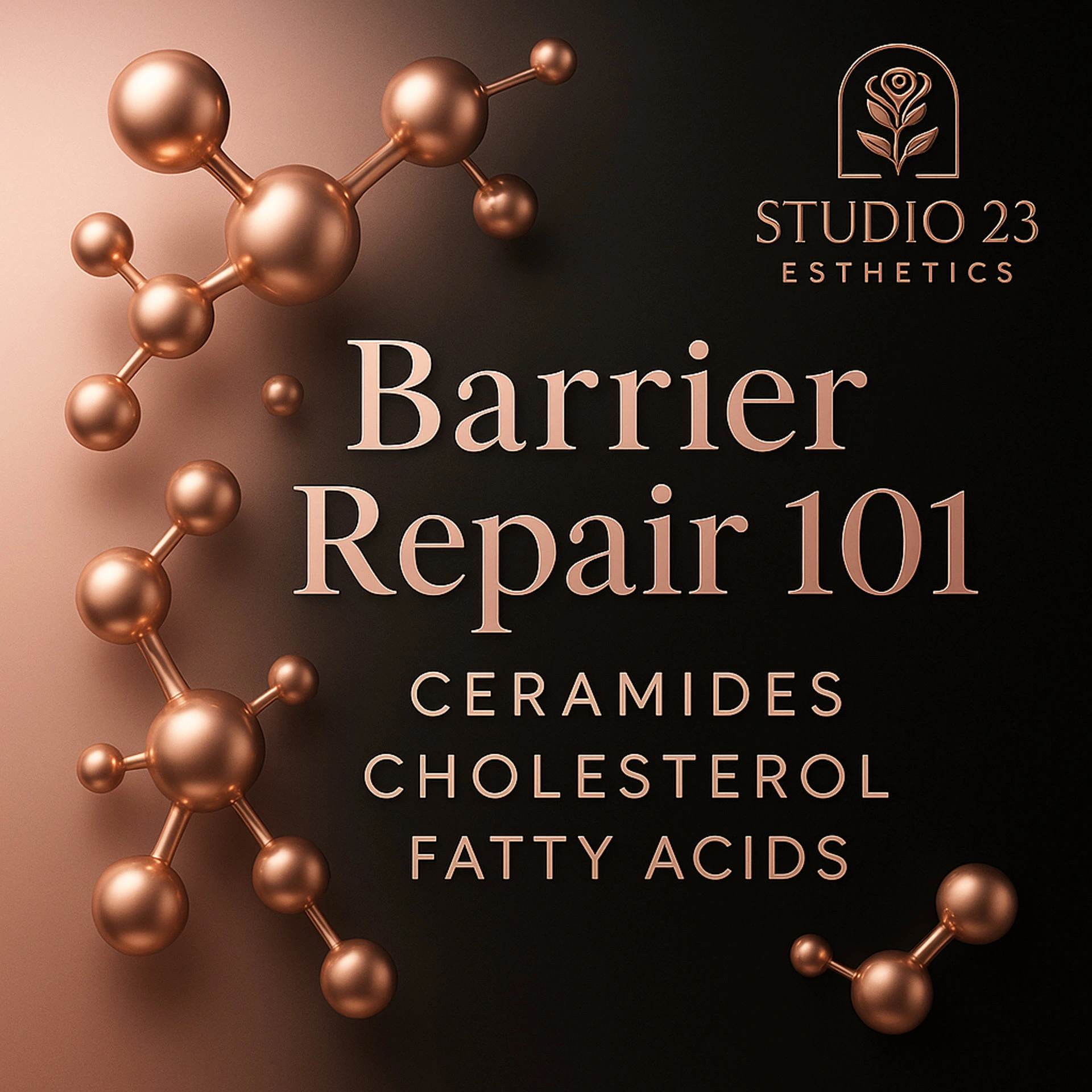
Barrier Repair 101: Ceramides, Cholesterol, and Fatty Acids Explained

Skip menu
Skip menu

STUDIO 23 / MY JOURNAL

Skincare Science

Barrier Repair 101: Ceramides, Cholesterol, and Fatty Acids Explained

Decode the barrier triad and how to rebuild resilience with smart formulations.

Illustration of skin barrier layers
I still remember a client who walked into my studio during one of our crisp fall mornings — cheeks flushed, tightness around her eyes, and the kind of discomfort you can read before she even speaks. She sat down and whispered, “Summer… my skin feels like sandpaper. Everything burns right now.”
If you’ve ever felt that way - raw, reactive, unable to tolerate even the gentlest moisturizer you’re not alone.  
And you’re not “sensitive.” Your skin barrier is simply asking for help.
For 18+ years, I’ve repaired hundreds of damaged barriers, and the same truth always holds: When your barrier is compromised, nothing works the way it should. Not your treatments, not your homecare, not even your makeup. But here’s the beautiful part, barrier repair isn’t mysterious or complicated.
It’s deeply scientific, yes… but also surprisingly intuitive once you understand the formula that nature already designed for us. Today, I want to walk you through the three essential lipids your skin must have to stay supple, hydrated, and resilient.
Let’s dive into the barrier triad.
What Your Barrier Really Is (and Why It Fails)
Your barrier, or stratum corneum, is the outermost layer of your skin — a protective shield made of:
• Corneocytes (your “brick” cells)  
• Lipids (your “mortar” that seals everything together)
When the lipid matrix breaks down, moisture escapes, irritants enter, inflammation flares, and suddenly your skin feels like it’s in a never-ending argument with the world.
This breakdown can happen from:
– Overexfoliation  
– Harsh cleansers  
– Dry climates (hello, New Mexico!)  
– Retinoid misuse  
– Stress  
– Hormonal shifts  
– Skin conditions like eczema  
But the solution always comes back to… Restoring the lipid ratio.
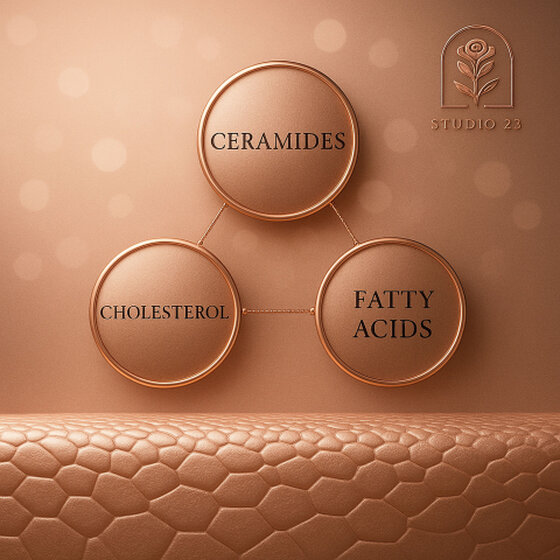
The Famous 3: Ceramides, Cholesterol & Fatty Acids
Dermatology research shows that your skin barrier stays strongest with a lipid ratio of roughly:
• 50% Ceramides  
• 25% Cholesterol  
• 15–25% Fatty Acids
This is your skin’s natural recipe - and when products match it, healing happens beautifully. Let’s break each one down in real language…
1. Ceramides — The Glue of Youthful, Resilient Skin
Ceramides are the quiet heroes of skin health. They’re like the mortar that hugs every corner of your skin’s barrier, creating that silky, bouncy, hydrated feel we all love.
When you’re low on ceramides, you’ll notice:
• Flakes  
• Tightness  
• Rough texture  
• Redness  
• Products suddenly sting  
I always say, “If your skin feels older than you are — start with ceramides.”
2. Cholesterol — The Flexibility Builder
Cholesterol isn’t the villain we often hear about in wellness conversations. On your skin, it’s a softening, healing, elasticity-enhancing superstar. Without enough cholesterol, the barrier becomes stiff and cracks easily — almost like clay that’s dried too fast.
Products with balanced cholesterol help your skin:
• Bounce back  
• Flex without micro-tearing  
• Recover from treatments faster  
• Stay hydrated longer  
This is often the missing ingredient for clients who feel like they “never quite heal,” even with good skincare.
3. Fatty Acids — The Nourish & Restore Lipids
Fatty acids (especially linoleic acid) are essential building blocks for:
• Reducing inflammation  
• Maintaining softness  
• Supporting ceramide production  
• Strengthening barrier resilience  
They also give the skin that juicy, plush, healthy glow my clients adore — especially after facials. If your skin is dull, stressed, or chronically dehydrated, fatty acids bring life back.
How I Rebuild a Damaged Barrier at Studio 23
When a client comes in barrier-compromised, I don’t jump into peels or exfoliation. We slow down, breathe, and rebuild.
My step-by-step approach:
1. Stop all exfoliants temporarily  
2. Switch to a hydrating, non-stripping cleanser  
3. Introduce a lipid-balanced moisturizer  
4. Seal moisture at night with gentle occlusion  
5. Improve hydration internally
6. Resume active skincare slowly once skin is calm again

How Long Does Barrier Repair Take?
Depending on damage and lifestyle:
• Mild disruption: 3–7 days  
• Moderate disruption: 2–4 weeks  
• Severe disruption: 6–12 weeks  
I always reassure clients: “Your skin isn’t failing — it’s healing. And healing has a rhythm.” Your barrier loves consistency, gentle hydration, and predictable routines. When the triad is restored, your complexion begins to flourish again.
The Invisible Benefits You Feel Before You See
Clients often tell me: “Summer, my skin just feels peaceful again.”
Before texture changes…  
Before pigment fades…  
Before fine lines soften…
There’s a moment when your skin simply calms down. That’s the barrier doing its job again. Barrier repair is not glamorous, but it is transformative. It’s the foundation of every stunning treatment result — lashes, brows, peels, facials — everything I offer at Studio 23 depends on a strong, steady, nourished barrier.

Final Takeaway — Your Barrier Is Your Beauty Anchor If you take one thing away from today’s blog, let it be this:
Your skin barrier is not fragile — it’s intelligent. You just need to give it the ingredients it already understands.
Ceramides.  
Cholesterol.  
Fatty acids.  
The healing triad.
And when your barrier thrives, everything else you do for your skin finally begins to shine. If you’re feeling dry, reactive, or unsure where to start, come see me at Studio 23. We’ll rebuild your foundation gently, intentionally, beautifully — together.

CONTINUE YOUR CARE

Questions about your own routine or your next visit? Bring them to me.

Barrier Repair 101: Ceramides, Cholesterol, and Fatty Acids Explained

Studio 23 Esthetics — Where Science Meets Radiance
Published by Studio 23 Esthetics (Summer Rose-Scott in Skincare Science · Wednesday 10 Dec 2025 · Read time 5 minutes
Tags: Barrier, Repair, Ceramides, Cholesterol, Fatty, Acids, Skin, Barrier, Resilience, Smart, Formulations, Skincare, Ingredients, Repair
Illustration of skin barrier layers

I still remember a client who walked into my studio during one of our crisp fall mornings — cheeks flushed, tightness around her eyes, and the kind of discomfort you can read before she even speaks. She sat down and whispered, “Summer… my skin feels like sandpaper. Everything burns right now.”

If you’ve ever felt that way - raw, reactive, unable to tolerate even the gentlest moisturizer you’re not alone.  
And you’re not “sensitive.” Your skin barrier is simply asking for help.

For 18+ years, I’ve repaired hundreds of damaged barriers, and the same truth always holds: When your barrier is compromised, nothing works the way it should. Not your treatments, not your homecare, not even your makeup. But here’s the beautiful part, barrier repair isn’t mysterious or complicated.
It’s deeply scientific, yes… but also surprisingly intuitive once you understand the formula that nature already designed for us. Today, I want to walk you through the three essential lipids your skin must have to stay supple, hydrated, and resilient.

Let’s dive into the barrier triad.

------------------------------------------------------------

What Your Barrier Really Is (and Why It Fails)

Your barrier, or stratum corneum, is the outermost layer of your skin — a protective shield made of:

• Corneocytes (your “brick” cells)  
• Lipids (your “mortar” that seals everything together)

When the lipid matrix breaks down, moisture escapes, irritants enter, inflammation flares, and suddenly your skin feels like it’s in a never-ending argument with the world.

This breakdown can happen from:

– Overexfoliation  
– Harsh cleansers  
– Dry climates (hello, New Mexico!)  
– Retinoid misuse  
– Stress  
– Hormonal shifts  
– Skin conditions like eczema  

But the solution always comes back to… Restoring the lipid ratio.

------------------------------------------------------------

The Famous 3: Ceramides, Cholesterol & Fatty Acids

Dermatology research shows that your skin barrier stays strongest with a lipid ratio of roughly:

• 50% Ceramides  
• 25% Cholesterol  
• 15–25% Fatty Acids

This is your skin’s natural recipe - and when products match it, healing happens beautifully. Let’s break each one down in real language…

------------------------------------------------------------

1. Ceramides — The Glue of Youthful, Resilient Skin

Ceramides are the quiet heroes of skin health. They’re like the mortar that hugs every corner of your skin’s barrier, creating that silky, bouncy, hydrated feel we all love.

When you’re low on ceramides, you’ll notice:

• Flakes  
• Tightness  
• Rough texture  
• Redness  
• Products suddenly sting  

I always say, “If your skin feels older than you are — start with ceramides.”

------------------------------------------------------------

2. Cholesterol — The Flexibility Builder

Cholesterol isn’t the villain we often hear about in wellness conversations. On your skin, it’s a softening, healing, elasticity-enhancing superstar. Without enough cholesterol, the barrier becomes stiff and cracks easily — almost like clay that’s dried too fast.

Products with balanced cholesterol help your skin:

• Bounce back  
• Flex without micro-tearing  
• Recover from treatments faster  
• Stay hydrated longer  

This is often the missing ingredient for clients who feel like they “never quite heal,” even with good skincare.

------------------------------------------------------------

3. Fatty Acids — The Nourish & Restore Lipids

Fatty acids (especially linoleic acid) are essential building blocks for:

• Reducing inflammation  
• Maintaining softness  
• Supporting ceramide production  
• Strengthening barrier resilience  

They also give the skin that juicy, plush, healthy glow my clients adore — especially after facials. If your skin is dull, stressed, or chronically dehydrated, fatty acids bring life back.

------------------------------------------------------------

How I Rebuild a Damaged Barrier at Studio 23

When a client comes in barrier-compromised, we don’t jump into peels or exfoliation. We slow down, breathe, and rebuild.

My step-by-step approach:

1. Stop all exfoliants temporarily  
2. Switch to a hydrating, non-stripping cleanser  
3. Introduce a lipid-balanced moisturizer  
4. Seal moisture at night with gentle occlusion  
5. Improve hydration internally
6. Resume active skincare slowly once skin is calm again

------------------------------------------------------------


How Long Does Barrier Repair Take?

Depending on damage and lifestyle:

• Mild disruption: 3–7 days  
• Moderate disruption: 2–4 weeks  
• Severe disruption: 6–12 weeks  

I always reassure clients: “Your skin isn’t failing — it’s healing. And healing has a rhythm.” Your barrier loves consistency, gentle hydration, and predictable routines. When the triad is restored, your complexion begins to flourish again.

------------------------------------------------------------

The Invisible Benefits You Feel Before You See

Clients often tell me: “Summer, my skin just feels peaceful again.”

Before texture changes…  
Before pigment fades…  
Before fine lines soften…

There’s a moment when your skin simply calms down. That’s the barrier doing its job again. Barrier repair is not glamorous, but it is transformative. It’s the foundation of every stunning treatment result — lashes, brows, peels, facials — everything we offer at Studio 23 depends on a strong, steady, nourished barrier.

------------------------------------------------------------


Final Takeaway — Your Barrier Is Your Beauty Anchor If you take one thing away from today’s blog, let it be this:

Your skin barrier is not fragile — it’s intelligent. You just need to give it the ingredients it already understands.

Ceramides.  
Cholesterol.  
Fatty acids.  

The healing triad.

And when your barrier thrives, everything else you do for your skin finally begins to shine. If you’re feeling dry, reactive, or unsure where to start, come see me at Studio 23. We’ll rebuild your foundation gently, intentionally, beautifully — together.


0 / 5
There are no reviews yet.
Rate:5
Number of rates:0 
Percentage of ratings:(0%)
Rate:4
Number of rates:0 
Percentage of ratings:(0%)
Rate:3
Number of rates:0 
Percentage of ratings:(0%)
Rate:2
Number of rates:0 
Percentage of ratings:(0%)
Rate:1
Number of rates:0 
Percentage of ratings:(0%)
Your opinion is important to us and helps us improve our service.
Write a Review
Back to content


